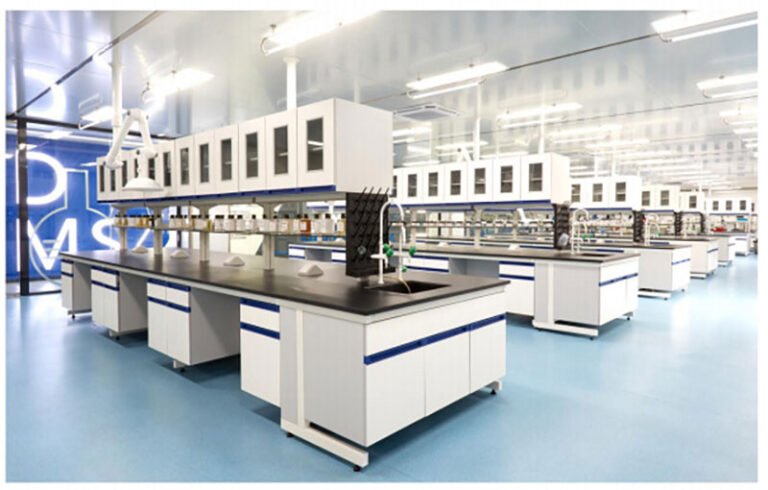
In the skincare OEM/ODM industry, one of the biggest concerns for buyers is a product that performs well during sampling but changes after mass production. A laboratory sample is often prepared manually in a small batch of around 50–200 g, while commercial production may take place in a vessel handling hundreds of kilograms. This transition, known as cosmetic manufacturing scale-up, can affect viscosity, texture, absorption, appearance, fragrance perception, and overall product stability.
Without careful control, a formula that feels excellent in the laboratory may not perform the same way in production. Differences in mixing speed, shear force, heating and cooling curves, or raw-material batches can all create variation. For buyers, this is not simply a formulation issue—it is a skincare OEM quality consistency risk that can affect customer satisfaction, repeat orders, and brand reputation.
At DaiMeiShi, our project control framework is designed to reduce this risk through a structured approach to sample-to-mass-production consistency.
Pilot-Scale Testing Before Mass Production
A confirmed laboratory sample should not automatically move directly into full-scale production. For formulas that require scale-up verification, we conduct pilot-scale testing before production is arranged.
The purpose is to verify whether the formula can be reproduced under larger-scale processing conditions. In a pilot batch, the team can evaluate key manufacturing variables, including:
- Mixing and shear speed
- Homogenization time
- Heating and cooling curves
- Ingredient addition sequence
- Emulsification performance
- Bulk appearance, viscosity, and stability
For relevant projects, a laboratory formula may be tested on a 50–100 kg pilot system before larger production begins. This type of formula scale-up validation helps the production team identify process-sensitive points early, rather than discovering them after a full batch has been made.
The goal is not to assume that every formula will behave identically at a larger scale. The goal is to establish a controlled process that can reproduce the approved product experience as closely and consistently as possible.
Formula Locking and Raw-Material Standards
Once the formula and sample are approved, the next critical step is to lock the product standard. This creates a clear reference for future production and supports stronger batch-to-batch consistency.
The approved product specification should record the key information needed for production and quality control, such as:
- Approved raw materials and supplier requirements
- Formula version and ingredient specifications
- pH target range
- Viscosity range
- Density, appearance, color, and odor standards
- Production process parameters
- Packaging compatibility requirements
- Approved reference sample or golden sample
Raw materials should not be substituted simply to reduce cost without technical review and customer approval. Even when two ingredients have similar names, differences in grade, concentration, source, or processing method may affect the final product.
For products containing active ingredients, the formulation team should also consider the intended use level, product category, target market requirements, and appropriate safety evaluation. Where applicable, additional assessments—such as stability testing, compatibility checks, or patch testing—should be planned according to the product and market requirements. These steps form part of responsible skincare quality control, rather than a blanket guarantee that every individual user will have the same response.
Controlled Weighing and Homogenization Processes
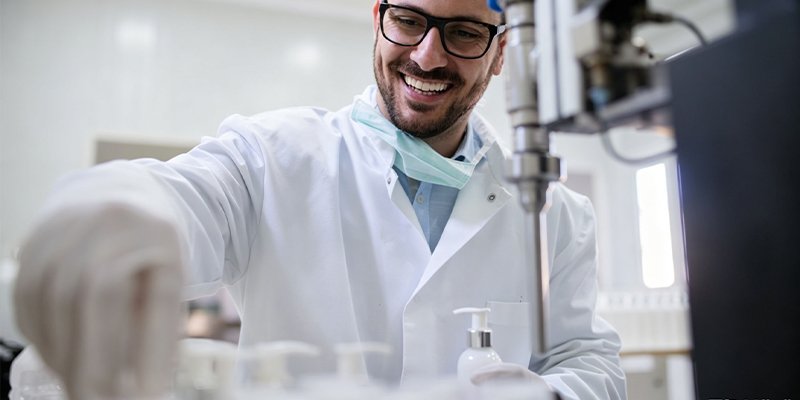
Manual handling can introduce avoidable variation, particularly when a formula includes low-dose functional ingredients, fragrances, colorants, or sensitive actives. Controlled weighing and processing are therefore essential in private label skincare production.
During manufacturing, the production team should follow the approved batch record and process parameters. Key controls commonly include:
- Accurate ingredient weighing
- Verified material identification before addition
- Controlled temperature during heating and cooling
- Defined mixing and homogenization settings
- Recorded processing time
- In-process checks for appearance, pH, viscosity, and bulk condition
Where automated or programmable production equipment is used, important process settings can be repeated more consistently from batch to batch. However, equipment alone is not enough. The approved formula, raw-material controls, production records, and trained operators must work together as part of a complete cosmetic manufacturing process.
This is especially important for emulsions, serums, creams, cleansing products, and other systems where small process changes can influence texture, separation risk, foaming, or sensory performance.
Retained Samples and Finished-Product Comparison
Before a batch is released, finished products should be checked against the agreed product standard and, where available, the customer-approved golden sample.
Quality-control checks may include:
- Appearance and color
- Odor
- Texture and skin feel
- pH and viscosity
- Fill weight or volume
- Packaging condition
- Label and coding accuracy
- Microbiological or other release testing, where required by the product specification or market
A retained sample from each batch provides an important reference for future investigation, repeat orders, and quality traceability. If a buyer later has a question about a shipment or a repeat order, the retained sample and production records can help the parties compare the actual batch against the approved standard.
The release decision should be based on agreed specifications and applicable quality requirements—not on a general claim of “99% similarity.” This is more credible, more measurable, and more useful for a buyer assessing cosmetic quality control.
What Buyers Should Confirm Before Approving Mass Production
To reduce avoidable risk, buyers should confirm the following points before placing a production order:
- Is there an approved sample and a clearly identified golden sample?
- Has the formula been reviewed for cosmetic manufacturing scale-up?
- Are key raw materials and packaging components defined in the product specification?
- Which in-process and finished-product checks will be performed?
- Will batch records and retained samples be maintained?
- What documents can be provided with the shipment, such as a COA or product specification sheet?
A reliable skincare manufacturing project is not based only on a good sample. It depends on a repeatable system that connects formulation, pilot verification, raw-material control, production execution, and final release testing.
For buyers, the real value is greater confidence that the product approved during development can be delivered with consistent quality in commercial production. Discuss your product requirements with DaiMeiShi to build a practical skincare OEM quality consistency plan before mass production begins.